Weekly insights into our crazy world.

Friday, September 7, 2018

SEPT 7 NO VIOLATIONS YET FOR MLB'S NEW 'MOUND VISIT' RULE


SEPT 7  NO VIOLATIONS YET FOR MLB'S NEW 'MOUND VISIT' RULE

If you've attend any Major League Baseball game this season, you might have noticed a new addition to the scoreboard. Every ballpark is now required to count the number of "mound visits" during a game. What is a "mound visit"? It's when the pitcher stops playing the game and instead talks to someone about it. He usually chats with the catcher, a coach, the third baseman...but sometimes it's the whole infield! Anyhow, in an attempt to speed-up the sport, MLB Commissioner Rob Manfred set a limit on the number of mound visits: Six. It's the MVR (Mound Visits Remaining) on the scoreboard during a game.

With the regular season soon ending, it seems the measure so far has been a major success. Last season, teams averaged 7.4 mound visits each game. This year, the figure has been cut in half to 3.6. Overall, that means the games are shorter. They're three hours and one minute on the average, also down from last season. NOTE: Extra visits are allowed for extra innings. Punishment for a seventh mound visit is ejection of the pitcher.

While old timers are complaining about any altering of the sacred game, we here at the DUNER BLOG feels the change is long overdue. Let's face it: Baseball is the only major sport where...any time you like...a player can take a personal break. The other major sports, basketball, football, hockey...they all count timeouts. Could you imagine LeBron just stopping at half-court to talk with coach? Or Tom Brady suddenly strolling away from center to clarify with the O.C.?  Of course not!

Commissioner Manfred understands this and will continue to tinker with baseball's byzantine rules to make the sport better for fans. Last season, he abolished the dreaded four-pitch intentional walk. No longer do fans have to watch two men play catch...nowadays, the batter just trots directly to first base. He's also instituted a clock for pitchers who stand and stare at the plate for minutes before their windup. Don't fret, old timers, these measures are not changing baseball strategy!

While the new mound visit policy sounds positive, the enforcement of the rule by officials and teams has been spotty. See, the players' and umpire's unions both opposed the measure. The players only care about winning games and want to communicate as much as possible. The umps know baseball has no clock and want to be in charge of managing the game. So anytime the number of mound visits gets to five, the rule is not enforced. Believe it or not...in the 2,315 games played so far this season...a grand total of ZERO violations have been called!

Thursday, August 30, 2018

AUG 30 VENEZUELA REMOVES FIVE ZEROS FROM CURRENCY


AUG 30  VENEZUELA REMOVES FIVE ZEROS FROM CURRENCY

Last week, Venezuelan finance minister Nelson Merentes made a most curious announcement. From his office in Caracas, he proclaimed the solution to the nation's crippling economic crisis. Raising petroleum exports? Nope. Another international bailout loan? Wrong again. It seems there is a more simple answer. The Venezuelan government is removing five zeros from the Bolivar. A newly minted 'Sovereign Bolivar' is being rolled out. Best of all? They have new colors!

While this sounds like a nice idea, Johns Hopkins economic prof Steve Hawke calls it a cosmetic solution: "It means nothing unless you change economic policy." He explains the only accomplishment of moving a decimal point in your money is avoiding the dreaded 'Wheelbarrow Problem." This refers to the post-war Weimar Republic. Potatoes cost a billion marks, and Germans needed wheelbarrows to carry that many bills. Anyhow, hyper-inflation is a serious condition that Venezuela cannot solve by putting mascara on a pig.

Sadly, Venezuela's currency change is hardly a new concept. In fact, slashing five zeros isn't even a record. In 2009, beleaguered Zimbabwe introduced the Fourth Dollar, thus removing twelve zeros from their currency. In fact, most developing nations have, at some time, shifted decimals points to deal with runaway inflation. It's seen as a way to simplify matters for people. Recently, Colombia just replaced three zeros with the word 'mil,' on their currency notes as people were already verbally omitting the word thousand.

Most experts worldwide are viewing the move in Venezuela as an act of desperation for President Nicolas Maduro. Let's face it: He's had a difficult month. Earlier in August, he survived a high-tech assassination attempt. At a military parade in Caracas, an explosive-laden drone flew precariously close to El Presidente. Although El Jefe was unhurt, seven of his soldiers were badly burned and injured. It's a toxic environment in Venezuela. Every day, a protester dies, a hundred people flee and everyone is hungry.

But life goes on, and Venezuelans are adjusting to their new currency notes. While it's easier to spend 20 Bolivar...instead of 200,000 Bolivar...for a cup of coffee, people are always weary of a new money. Having familiar bills and coins is a reassuring part of being a citizen. Take the USA for example. Any attempt at change of our money is met with vigorous public disapproval. Remember the Susan B. Anthony dollar coin? Yet perhaps we can learn from Venezuela. Pennies and nickels are worthless and should be removed from circulation. Let's just move over the decimal one place and make the dime the smallest coin!

Friday, August 24, 2018

AUG 24 CHINESE TOURISTS NOW OUTNUMBER AMERICAN TOURISTS


AUG 24  CHINESE TOURISTS NOW OUTNUMBER AMERICAN TOURISTS

The World Bank just released some new statistics about global tourism. For the first time ever, the People's Republic of China has nabbed the top spot with 156,120,000 international travelers in a calendar year. The US...the leader in this statistic for the last century...has slipped into second place. If you've visited any major attraction lately, you likely already know about this. From the Space Needle in Seattle to the Eiffel Tower in Paris, you'll see that information boards now include Chinese along with English, French and Spanish.

Why the sudden surge? Let's call it a pendulum swing. Back in the days of Mao, Chinese citizens were forbidden from leaving the mainland for any reason. These sanctions weren't officially lifted until the 1990's, but access to travel was still hindered. Today, it's much easier for Chinese nationals to get a passport and take a vacation overseas. Not surprisingly, people are lining up to get theirs. Let's face it: If you deny humans something, they'll salivate at the opportunity to taste it once it becomes available.

Let's check out the statistics. In the year 2000, only 10 million Chinese nationals traveled overseas. Yet by last year, this number has risen 156 million. That's a 1,380% increase! Yet even more important than this number is another figure: The amount of money spent by a nation's travelers. In this category, the PRC wallops the USA. In 2017, the Chinese shelled out a cumulative $2.6 billion in international purchases. That's twice the amount second-place Americans spend.

This statistic gives us an idea of what the Chinese do when they travel: They like to shop. Again, the pendulum is swinging. For centuries, China has shunned imports in favor of boring domestically produced products. This means no French designer jeans at a shopping mall in Qingdao. It follows that when Chinese tourists arrive in Milan, they head straight to the Versace and Prada boutiques in the Galleria.

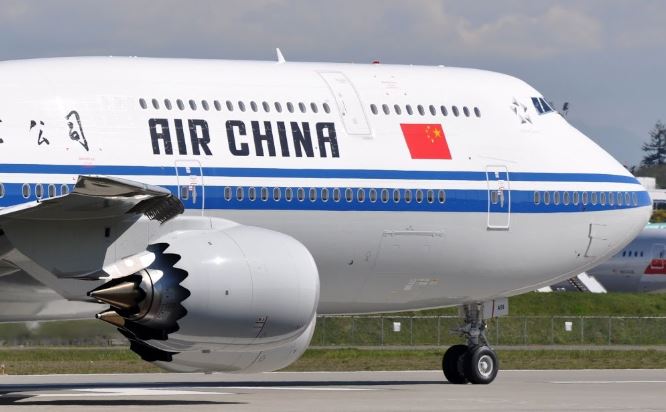
So what does all this mean for the future of international travel? First of all, it means China is creating a lot of jobs in tourism sectors worldwide. It's a great time to be a Cantonese-speaking tourist guide! Yet it also means busier airports and longer lines at the Tower of London. This has many locals in impacted cities like Venice and Barcelona concerned. Don't tell them: It's only going to get worse. See, only 7% of Chinese nationals owns a passport. (Compared to 40% in the US and 76% in the UK). But 7% of the PRC's population is 100,000,000 people! Just imagine what happens when the remaining 93% starts traveling..


Friday, August 17, 2018

AUG 17 WHAT IS THE LUCKIEST NUMBER?


AUG 17  WHAT IS THE LUCKIEST NUMBER?

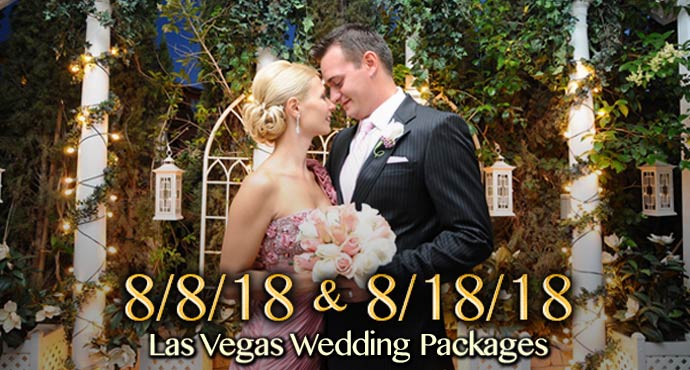
Last Saturday was August Eighth, or numerically, 8/8. Since this magical date only falls on a Saturday once in a decade, many couples jumped at the chance to get married on such an auspicious day. "With an extra '8' thrown in for 2018," explained James Wu, a superstitious fiancé, "This Saturday is the luckiest day of the year!" This got us at the DUNER BLOG wondering: What is the luckiest number for people worldwide? Fortunately, British mathematician Alex Bellos surveyed 30,000 people across the globe. Here's the results:

BRONZE: #8. In third place is number eight. This is a direct result of the Chinese being culturally superstitious about numbers. Four is horribly unlucky and eight is magical. Example: The Opening Ceremonies for the Beijing Olympics were also intentionally held on August Eighth, (8/8) at 8:08pm. Why is 8 so lucky? In Cantonese, the word for eight ('Fa) sounds a lot like the word for wealth. Also, the number 88 looks like the symbol for 'double happiness.' Furthermore, it's a balanced shape that can be inverted into the infinity sign.

SILVER: #11. Bellos' study found that many people worldwide are also obsessed with the number eleven. In Tarot, card #11 is the symbol of strength and justice. Eleven comes one after ten. Ten is a balanced end of a set...but eleven is one extravagant number more. Therefore, eleven symbolizes the future and what's to come. Veteran's Day is on November Eleventh (11/11) and Apollo 11 was the first manner lunar landing. It's also lucky in South Africa, which has eleven official languages and Nelson Mandela was their eleventh president.

GOLD: #7. Far and away, the most popular lucky number is SEVEN. When polled, nearly half of the participants in the survey instantly replied: "SEVEN!" For some reason, when humans count things, they like to stop at seven. Seven days in a week. Seven colors on the rainbow. Seven notes on a musical scale. Seven continents. Seven seas. You get the picture! It also figures into literature, with Seven Dwarfs and Seven Brides for Seven Brothers. Perhaps TV star George Constanza took it to the extreme when he wanted to name his own son 'Seven.'

So there you go. If you're a gambler, event planner or just like to play it safe...remember to chose your numbers wisely!

Thursday, August 9, 2018

AUG 9 WHO INVENTED FRENCH FRIES?


AUG 9  WHO INVENTED FRENCH FRIES?

Here's an item you might have missed: Last Tuesday was International Fries Day in Belgium. Although not a public holiday...Belgians don't get the day off work...it's a chance for the whole nation to celebrate something they truly love: Fries. At the Gran Place in the capital Brussels, vendors take over the massive square selling tons of kilos of spuds. With over 4,000 licensed fry stands in the nation, it's easy to see their popularity. In fact, Belgium is the birthplace of the French Fry!

Here's the story: Way back in the year 1680, a bitter winter storm battered the Low Countries. It was so cold that the River Meuse froze over. This meant that people of Namur couldn't fish and therefore couldn't eat their favorite dish: Fried Fish. Still hungry, chefs decided they would fry potatoes in the shape of fish instead. Called "Pommes Frites" they caught on and became a local specialty. They remained a regional side-dish until World War One. That's when American soldiers arrived and fell in love with fries. Since Namur is in the French-speaking part of Belgium, they erroneously named them FRENCH fries.

Not so fast! French food historian Pierre Leclercq begs to differ on the matter. In a recent article penned in Le Figaro newspaper (curiously published the same day as the Belgian holiday), he tried to set the record straight. "No, French Fries Are Not Belgian" screamed the headline. Leclercq conducted research and determined the potato, a New World food, didn't arrive in Central Belgium until 1735--a good fifty years after the winter of 1680. He also noted a lack of fried foods from the regional cuisine as well.

So who invented the French Fry? The French, of course! Declercq researched and found a different conclusion. When the potato arrived in Paris, vendors wanted to come up with an appetizing way to serve the inexpensive tuber. So they sliced them into smaller shapes and fried them in vegetable oil. Leclercq found records of them being sold to opera attendees on Pont Neuf in the year 1700. So when American GIs came to Paris, they ate French Fries and took the recipes back to America...and then the world!

Sadly...until someone invents a time machine...humankind will never know who really invented the French Fry. This recent tiff between Belgium and France completely coincides with their recent battle on the soccer pitch at the World Cup. It was the semi-finals! Anyhow, tiny Belgium always feels bullied by big, tough France, and this Fry Spat is just another chapter. Quipped Bernard Lefevre from Antwerp: "Nobody invented water, but somebody invented the spa. Potatoes do not come from France or Belgium, they come from Peru. But Belgians made frites an art and a perfect product."

Saturday, August 4, 2018

AUG 4 THE ŠKODA: A CZECH SUCCESS STORY


AUG 4 THE ŠKODA: A CZECH SUCCESS STORY

One of the advantages of the Euro-Zone has been the opening of automobile markets to neighboring nations. It's been nearly twenty years, and the results are in. Diversity is apparent. For example, in France, you'll see many different brands and makes of cars. Yet decade or two ago, the French roads were a sea of Peugeots and Citroens. And parked prominently upfront by the valets of Paris is a new-comer to the luxury car market: The Skoda.


Never heard of the Škoda? It may sound like an upscale Swedish manufacturer but this car actually comes from Czechia. (formerly the Czech Republic). Wait...You're wondering: How does a country in Eastern Europe produce a desired automobile? Isn't this the region that was responsible for the Yugo? The Lada? Well...during the Cold War...you could put the Škoda in this category as well. The MB1000 had a tiny 1200cc engine in the rear of the box. (Oops! I mean the rear of the car.) See, when markets are controlled by the Soviets, this is the type of car you must build.

Sadly, the Skoda was stuck with this ugly stereotype. Prior to the Cold War, the Škoda was a sought-after automobile. Take, for example, the stylish Škoda 422. It was the vehicle of choice for the Viennese elite in the 1920's. Let's face it: It's the perfect car to take you and the baroness to the opera or symphony house. It wasn't just Austria. From the city of Mlada Boleslav, the factory exported vehicles to Berlin, Paris, Milan and more. And not just luxury automobiles either, as Škoda produced trucks and motorcycles as well.


Motorcycles? Yep, that was the company's first product. Škoda actually dates back to 1894. That's when an adventurous bicycle salesman decided to place a small motor between the handlebars of a bike. It was horribly unsafe, but it was a step in the right direction. Soon, the company changed design. Specifically, they  moved the engine under the seat. This made the two-wheeled invention much more safe. In 1898, the Škoda was the first company making motorcycles in continental Europe. Called the Slavia, it was even used by Britian's Royal Army.


It's clear: The history of the Škoda Car Company mirrors that of the Czech people: Up, down, up. For centuries, the Kingdom of Bohemia was a thriving scientific community. Then, suddenly in 1945, the Iron Curtain was drawn across Europe. The poor Czechs ended up on the wrong side! For fifty years, they languished, producing mundane cars and products. Finally, the Velvet Revolution lifted the veil and let the eager Czechs compete across Europe. Like the Croatian Soccer team, they entered a crowded marketplace and thrived!

Friday, July 27, 2018

JULY 27 IS THE US / CANADA BORDER PATROLLED?


JULY 27  IS THE US / CANADA BORDER PATROLLED?

Throughout his campaign and presidency, Donald Trump has made the security of the US / Mexico border a top priority. Endless tweets warn of armies of rapists sneaking across. To counter, the president is constructing a massive wall...as you already know. Yet with all this focus on the nation's southern border, we thought it would be helpful to give an update on the other international border in America: The northern one with Canada.

Officially called the International Boundary by the US government, it's three times longer than the testy Mexican border. In fact, it's the longest such boundary between two nations in the world. Also, unlike the Mexican one, this border is undefended. You'll see border patrols at the official crossing points, but the vast majority is under little jurisdiction: Only the joint US / Canada International Boundary Commission is allowed here.

So what does the border look like? Let's start with the long, straight 1,500 mile stretch. It runs exactly along the 49th parallel (latitude). Most of the border runs through forests, so a 20-foot wide area has been felled to indicate its location. It's called the "No Touch" area and it's illegal for anyone (other than the Commission) to be there. In the prairie areas of the Dakotas, it's indicated by sign posts every 100 yards. The next 800 miles of border are over water. Four of the five Great Lakes (and Niagara Falls) are bisected by the US / Canada border.

Things get dicey after the St. Lawrence River. Here, the border wiggles and waggles between New York, Vermont and Quebec. This is the oldest section of the border. It was drawn up 250 years ago at the Peace of Paris. Hence, a few places ended up with the line going right down the middle of town. For example, between Derby Line (US) and Stanstead (Canada), the international boundary is a row of flower pots. The library next door has a Canadian entrance on one side of the building and an American on the other!

Finally, there is the nearly 2,000 mile stretch that separates Alaska from the Yukon. Since the area is very sparsely populated, there is no physical indication of the border on land. However, the roads are curvy and sometimes straddle between the two nations. This impacts the town of Hyder, Alaska. It's only accessible by driving through Canada first. There are no passport checks, since you can only go to one place!