Weekly insights into our crazy world.

Friday, September 13, 2019

SEPT 13 WHICH COUNTRY PRODUCES THE MOST M.L. BASEBALL PLAYERS?


SEPT 13 WHICH COUNTRY HAS THE MOST M.L. BASEBALL PLAYERS?

The Oakland A's made history on Wednesday when they inserted relief pitcher Jesus Luzardo into the game. The unknown leftie became the first ever major league player born in Peru. This season, a record 28% of the players (251 total) were not born in the USA. Let's see which nations supply the most and best athletes.

DOMINICAN REPUBLIC (102).  It's no secret, this island nation has become a factory for producing baseball talent. As documented in the award-winning documentary Sugar, players are recruited young, trained hard and groomed into superstars. NOTABLE PLAYERS: David 'Big Papi' Ortiz retired last year with 541 career home runs, tops for a Dominican player. Chasing him are Nelson Cruz (396) and Robinson Cano (334).

VENEZUELA (68). Believe it or not, baseball is more popular in Venezuela than soccer. Since 1945, the Liga Venezolano de Beisbol (LVBP) has grown in popularity and attendance. Their premier club, Leones de Caracas could beat the Baltimore Orioles. NOTEABLE: Starting pitcher 'King' Felix Hernandez has 169 career wins. Even more impressive when you consider he spent all 14 years with the Seattle Mariners. First baseman Miguel Cabrera is a lock for the Hall of Fame.

CUBA (19). With a strong history of American colonialism, baseball is part of Cuba. The first game ever was won by Club Havana  in 1874. The team went on the dominate the Cuba League from 1933 to 1960...when Fidel Castro banned all pro sports. Stay tuned: A new league is just underway.. NOTEABLE: Yankees pitcher Aroldis Chapman did the unlikely and replaced beloved Mariano Rivera as a lights-out closer. Yoenis Cespedes has 163 career HRs.

MEXICO (8). With 14 teams in two divisions, La Liga de Beisbol is the America's second largest baseball league. Since 1967, it has been classified as an official Triple-A classification by America's Major Leagues. Despite this, it has produced a surprisingly small number of prospects. NOTABLE: None since Fernando Valenzuela.

JAPAN (6). Baseball in Japan dates back to the 1920's, but things really took off during the American occupation following WWII. From a few clubs, Nippon Professional Baseball (NPB) has grown into a billion-dollar industry...it's the second most profitable baseball league in the world. NOTABLE: After six record breaking seasons as a pitcher and slugger, Shohei Otani signed a ginormous contract with the Anaheim Angels. Injuries have slowed him. Pitcher Yu Darvish has a crazy curveball.


Saturday, September 7, 2019

SEPT 7 A QUICK PRIMER ON THE BAHAMAS


SEPT 7  A QUICK PRIMER ON THE BAHAMAS

The horrifying images of the destruction from Hurricane Dorian have been heart wrenching to see. Entire communities lay ruined and flooded. Yet many people are still iffy when it comes to specifics about the Bahamas. Is it in the Caribbean? Who owns the islands? So here's a quick DUNER BLOG Primer about the island nation:

THE BAHAMAS ARE CLOSE BY. Aside from Canada and Mexico, (the land borders) and a couple Russian islands in the Bering Strait, the Bahamas are the closest foreign nation to the USA. Bimini Island is a mere 946 miles from Miami. That's closer than Cuba or Bermuda. None of the Bahamanian islands are in the Caribbean Sea. Rather, they are found above Cuba in the Atlantic Ocean.

THE BAHAMAS ARE FLAT. There are over 700 individual islands in the Bahamas. Of these, only 30 are inhabited. All of the islands have ridiculously low elevations. In fact, the highest point in the entire nation is on Cat Island, at a mere 209 feet. This is the main reason why they are so vulnerable to Category 5 Hurricanes like Dorian.

COLUMBUS FIRST LANDED THERE. Americans celebrate October 12th as Columbus Day, yet aside from Puerto Rico, the sailor never actually reached anywhere in the modern-day USA. San Salvador is where he first came. The islands remained under Spanish control until 1648, when English colonists took over. For the next 325 years, the Bahamas were part of the massive British Empire.

THE ORIGINAL PIRATE OF THE CARIBBEAN. Disney based the flamboyant character Jack Sparrow after an actual person: Edward Teach. Better known as Blackbeard, he was a 17th century pirate who wrecked havoc on Floridian shipping lanes. Authorities could never find him, as he hid amongst the Bahama's 700 uninhabited islands.

THE BAHAMAS HAS AN AWESOME FLAG. Most Caribbean countries have colorful and vibrant national flags, and the Bahamas is no exception. It's been flown proudly since independence from the UK in 1973. Here's the breakdown: The gold is the sun. Aquamarine = ocean. The black triangle symbolizes strength. With a long history of slavery, 90% of the population is of African descent.

ATLANTIS PARADISE IS THERE. The Bahamas spans an enormous region. March Harbor and Abacos Islands took the brunt of Dorian. Parts of the capital city of Nassau were impacted, but are now back and open for business. This includes the Atlantis Paradise Resort. All four thousand rooms and suites are beckoning tourists back!

THE BAHAMAS ARE NOT IMPOVERISHED. While the images on the news paint a dreary picture of the nation, there is another side. For example: Sir Sean Connery's multi-million dollar estate survived. See, the Bahamas is home to a bevy of other millionaires as well. This, combined with tourism and offshore finance, means the nation boasts a GDP of $34,000. That's third in North America and #26 worldwide...just behind #25 Italy.

NOTE: 'The' is placed before a couple of countries: The Ukraine, The Sudan, The Lebanon and The Bahamas. Geography is a social science, and there is no reason why.


Saturday, August 31, 2019

AUG 31 INDONESIA IS BUILDING A NEW CAPITAL CITY


AUG 31  INDONESIA IS BUILDING A NEW CAPITAL CITY

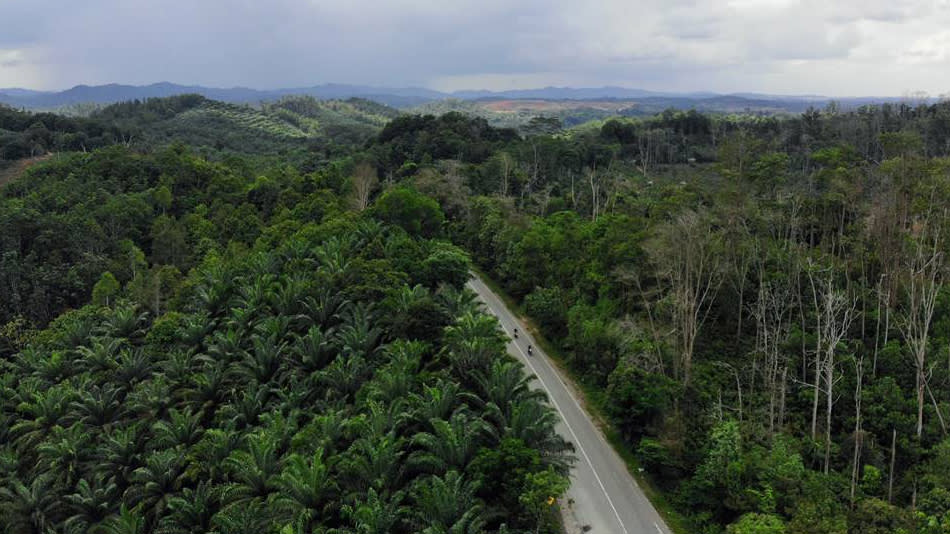
Attention Geography buffs worldwide! You're going to need to memorize a new capital city soon. And it's not some tiny principality in Europe...Nope, it's the world's fourth most populated country: Indonesia. On Monday, President Joko Widodo announced that in 2024, Jakarta will cease to be the nation's capital city. A new city is to be built on the island of Borneo. He didn't say what the NAME of the city will be.

What's wrong with Jakarta? The world's second largest metropolitan area (30 million people) will remain Indonesia's "centre of business, finance, trade and services," Widodo reassured residents. Yet the move sends a clear message: Jakarta needs to change. It's over-populated, horribly polluted and throttled by traffic. Although a 14-station subway system opened in May, building underground in Jakarta is difficult. Many sections of the city are sinking. It has the worst air in the world, with AQI readings around 270. Add the problem of frequent flooding, and you have a big city nightmare.

Widodo feels that Java...not just Jakarta...needs to stop being the center of development. Indonesia has more islands (17,000 total) than any other nation on earth. Yet 60% of the people live on the island of Java. (That's a whopping 145,00,000 people!) On the other hand, Borneo is an enormous, sparsely populated paradise covered in rainforests and lush jungles. Widodo notes it has "fewer earthquakes, floods and forest fires" than Java.

While the move caught Geography buffs by surprise, the idea has been discussed often. Sukarno, the George Washington of Indonesia, lobbied unsuccessfully for the move in the 1950's. He cited the need to decentralize the enormous nation, and noted the success a new capital city in similar nations: Brasilia and Canberra in Australia. The idea is to physically separate government from big business and the private sector. Sounds like a good plan!

Speaking of money, building a new international capital isn't cheap. To fund the massive project, Widodo will use 'asset management.' This involves selling the real estate the government already hold in Jakarta. Buildings in sought-after neighborhoods will net billions. Mostly, the timing of the announcement is Widodo's attempt at a lasting legacy as president. He's at the end of his term, and wants to be remembered as a pioneer...the 'People's President' who was not heavily influenced by the military, agribusiness or Islam.

Saturday, August 24, 2019

AUG 24 WHO IS TO BLAME FOR AMAZON WILDFIRES?


AUG 24  WHO IS TO BLAME FOR AMAZON WILDFIRES?

It's hard to tell which is hotter: The wildfires burning in the Amazon Rainforest or the anger raging on the Internet in response. "Notre Dame burns; billions donated. Amazon burns; no one cares!" noted TeresaG64 on Twitter. Celebs like Madonna, Leo DiCaprio and Cristian Ronaldo all posted heartbreaking pix and Instagram. (Unfortunately, they were from a fire in California.) To help our readers sort out fact from fiction, let's see who really is to blame..

JAIR BOLSONARO? Brazil's president is the obvious target. Elected with an pro-business, anti-environment agenda, he has delivered on campaign promises. Ridiculing climate change, he weakened requirements for agribusiness permits. This led to unprecedented amount of slash-and-burn. In his first term alone, 1,330 square miles of rainforest were lost. Brazil is challenging the USA to become the world's #1 producer of beef, and grazing land is needed.

MOTHER NATURE? "Not so fast!" replies Bolsonaro. Brazilian officials are quick to remind the world that neighboring nations like Bolivia and Paraguay are also ablaze. Why? This year is an unprecedentedly bad Dry Season. Parched conditions like these result in surprisingly large fires. Combined with an oddly strong winds, smoke from the fires has covered Sao Paolo in haze. Here's the kicker: Sao Paolo is a staggering 2,000 miles away from the flames!

BAD TIMING? It's true, 2019 turned out to be the wrong year to initiate Bolsonaro's new agribusiness policy. Instead of clearing a thousand square miles, things got out of control. Seven enormous states are struggling to survive. Over 2,500 fires are raging, an 85% increase over last year. This means a football field burns every minute. Brazil's largest state, Amazonas, declared a state of emergency. Globally speaking, the fires have released 228 megatons of carbon dioxide into the atmosphere. Since the rainforest is essential in absorbing carbon emissions, it's a double-whammy.

The GOOD NEWS is despite Bolsonaro's nationalistic banter ("The Amazon belongs to Brazil"), the renegade president is learning something else: Brazil is part of Planet Earth as well. Led by French President Marcon, an international deluge of anger has flooded Brasilia. Frozen aid will be followed by sanctions and boycotts. This has forced Jair to change course. Army troops are being dispatched and international help is arriving soon. Let's just hope it's not too late..


Saturday, August 17, 2019

AUG 17 PRESIDENT TRUMP WANTS TO BUY GREENLAND?


AUG 17  PRESIDENT TRUMP WANTS TO BUY GREENLAND?

When you first saw the bizarre headline about the USA purchasing Greenland, your first thought was to come to the DUNER BLOG. Thanks! Let's get to the mailbox.

Did Trump tweet this at three in the morning? Glen, Utah. Good question! Actually, it wasn't a tweet at all. Rather, this story first ran in the Wall Street Journal. Their source was a unnamed White House staff member. Anyhow, the insider quipped that Donald "in varying degrees of seriousness" brought up the subject a couple of times. Hmm. Whether it's legit or not, Glen, it still gives us one of the rare chances Greenland comes up in the news, so let's continue!

Did politicians over-react to the article? Karen, Hannover. Naturally! Regardless of the validity of the source, people couldn't wait to react online. Especially politicians. Greenland Premier Kim Kielsen says the world largest island is "not for sale." Likewise, Danish MP Rasmus Jarlov tweeted: "Forget it, Donald!" Wisely, Danish Prime Minister Mette Frederiksen declined to comment on the article in the WSJ.

Who owns Greenland? Kenji, Osaka. Norwegian Erik the Red was the first European to visit the ice-covered island in the year 986AD. He called it Greenland and encountered the Inuit and Thule people. Despite the colorful name, it received sporadic colonization from Norway over the next thousand years. OK, here comes the confusing part: In the 1700's, the Danish and Norwegian kingdoms merged together, sharing colonies. When they separated in a 1815 treaty, Denmark was ceded Greenland. Since 2009, Copenhagen has granted the island self-rule.

Why does Trump want Greenland? Juan, Quito. Alright...remember...Trump never officially announced this policy. Nonetheless, let's wildly speculate: It's not a military strategy, as the US already operates the Thule AFB as part of a 1950 NATO agreement with Denmark. Nope, most feel Trump is interested in Greenland's many natural resources. Coal (a Trump favorite), zinc, copper, iron...even rubies...are plentiful, yet hidden under the permafrost. With glaciers rapidly melting, these treasures might be exposed within a decade.

Is there any precedent for this? Burt, Boston. Believe it or not, this would NOT be the first time the USA has contacted Denmark about purchasing Greenland. Fresh off his savvy grab of Alaska, Secretary of State Seward also tried to acquire it. However, the only formal request came in 1946. President Truman offered $100 million for Greenland and was rebuffed. NOTE: The last time the US bought territory was in 1917, when the US purchased the Virgin Islands from Denmark.

How do the residents of Greenland feel about this? Sara, Boulder. Interesting angle, Sara. Greenland is the most sparsely populated place on earth. All of the 56,000 residents live in or around Nuuk, the capital. 90% are of Thule/Inuit descent. Although independent politically from Denmark, residents are still dependent on Denmark for food and supplies.

Stay tuned! Danish PM Frederiksen and Trump set to meet later in the year!!

Friday, August 9, 2019

AUG 9 WHICH SUBWAY SYSTEM IS THE MOST EXPENSIVE?


AUG 9  WHICH SUBWAY SYSTEM IS THE MOST EXPENSIVE?

While on summer holiday, Duner staffers used the Mexico City Metro. We were surprised to discover the price is still just 5 pesos per trip. That's only twenty-five cents! Here's how the ten largest subway systems worldwide compare:

MEXICO CITY. Cost: .25¢ 171 Stations. Constructed with funds from the petroleum-driven Mexican Miracle in the 1960's, the system opened just after the Olympics. Today, twelve busy lines carry over 4 million people daily. Given the fact that many riders are illiterate, it's the only subway that has an official symbol for every station.


BEIJING. Cost: .44¢ 391 Stations. Under Mao, a secret subway ferried government officials between a dozen stops around the capital. After Mao's death, it opened to the public. Since then, the population of Beijing has soared, and the subway has kept pace.


MOSCOW. Cost: .87¢  172 Stations. When the first line of the Moscow Metro opened in 1935, passengers were stunned. Designed to outshine the glamour of the Paris Metro, stations resemble mansions and cathedrals. Corinthian marble columns tower over sparking marble floors. Crystal chandeliers light the way for 7 million daily riders...still the most of any subway on earth.

SEOUL. Cost $1.20 232 Stations. The youngest subway on the list opened in 1977. Like K-Pop Music, it has expanded at a mind-numbing pace. Forty years later, it has expanded into nine lines and the Seoul Metro shows no signs of slowing up. Within the next five years, three new lines with dozens of new stations will open to the public. 

PARIS. Cost: $2.12. 381 Stations. The Fin de Siecle made Paris the world's most elegant city. When the Metropolitan opened in 1900, architect Hector Guimard took Art Nouveau to a new level. Even the entrances were grand: Ornate wrought iron gates beckon a traveler below. The Paris Metro is the world's most dense: It has the most stations per square kilometer.

CHICAGO. Cost: $2.25. 151 Stations. Also a pioneer in urban rail, Chicago's Urban Rail System opened eight years before Paris. Yet it wasn't until 1943 when Chicago opened its first line underground. Many of the Elevated Lines are still operable today. 

TOKYO. Cost: $2.46. 202 Stations. Perhaps the most intimidating of all subway systems, the Tokyo Subway has the most individual lines. They crisscross in a spider's web of color, right angles and Japanese characters. Yet once you venture into the stations, you'll find simple signage in English. Piece of cake!

NEW YORK CITY. Cost: $2.75. 472 Stations. Yep, you read that right: 472 stations make NYC the largest subway system in the world. This includes the recently-opened four stations on the Second Street Line in Manhattan...the most expensive subway line ever built. What separates NYC from the other systems is the Express Lines. Only a helicopter is faster!

BERLIN. Cost: $3.00. 170 Stations. When it first opened in 1902, Berlin was already the world's largest railway center. To differentiate between Street Cars, two names were used. The U-Bahn is underground and S-Bahn on the streets. Today, the two intertwine and often share the same tracks. Bring your wallet: German and Scandinavian cities average over $3 per subway system.

LONDON. Cost: $3.70. 306 Stations. The world's first subway ran under New Road and opened in 1863. Using the cut and cover method, it ferried passengers from Paddington to the Thames River banks. It set the standard and how subways should be built, and continues to innovate. Yet despite the changes, the Underground maintains the old-school feel of the Victorian Era. Check out the couches on the Bakerloo Line!


Thursday, July 11, 2019

JULY 11 TIMELINE OF THE VOLKSWAGEN BEETLE


JULY 11  TIMELINE OF THE VOLKSWAGEN BEETLE

It's the end of an era for automobile fans worldwide. Volkswagen has officially ceased production of the Beetle. On Tuesday, the last ever 'Bug' rolled off the assembly line at the VW Plant in Puebla, Mexico. Here is brief timeline of the illustrious auto's history:

1935. THE DREAM. German chancellor Adolf Hitler was insanely jealous of the success of the 'Model T' in America. Eager to replicate this in Germany, he created a car company. Hitler gave the engineers clear instructions: Create a people's car (Volk's wagon) that can drive 100 km/hr. yet also provide seating for two adults and three children.

1938. THE CAR. Three years later, the first car rolled onto the streets of Wolfsburg. Hitler loved the rounded, aerodynamic shape and called it a car for Jederman (Everyone.) The head designer was Ferdinand Porsche, who would later found his own successful auto brand. NOTE: Germans refused to use the boring name (Type #1), and it instantly nicknamed it the Kaifer (Beetle).

1945. THE RESURRECTION. During the war, the factory produced jeeps for the army. After the war, the region fell into the British Sector. To jump start the local economy, the Royal Army resumed production of the Beetle. Beetle-mania ensued. Production skyrocketed and Volkswagen became a symbol of the new Germany.

1955. THE NEW PLANT. With North America accounting for 40% of Beetle sales, VW decided to open a new factory overseas in Puebla. An amazing love affair resulted. Mexicans bought Vocho's at a staggering rate. As brightly painted taxis, they became a symbol of Mexico City.

1968 THE MOVIE. The third highest grossing film in 1968 was Disney's 'The Love Bug." It starred comedian Dean Jones as a washed up racer who finds a magical car named Herbie. #53 raced into our hearts, resulting in an uptick in sales. NOTE: Of the four sequels, only "Herbie Goes to Monte Carlo" stands up.

1972. THE RECORD. Buoyed by enormous popularity at home and abroad, the Volkswagen Type #1 produced its 15,007,034th car in 1972. This number is significant because it meant the Beetle had replaced the 'Model T' as the most produced car ever. It still holds this record, but the Toyota Prius is closing in!

1994. THE RE-VAMP. The 1980's saw sales for the Beetle decline, due in part to fierce competition from Japan (Toyota Corona) and the US (Ford Pinto). In response, engineers at Wolfsburg decided to modernize the Beetle. The original shape was kept, but everything else was updated. The result was a sensation. People loved the little touches...like a vase holder!

2003. THE END PART ONE. By the turn of the century, Puebla was the only Volkswagen factory still making the original 'Type #1" Beetle. Environmental issues (Bugs are polluters) resulted in a city-wide ban in Mexico City, and shortly thereafter VW announced the Type #1 was over.

2019. THE END PART TWO. All of which brings us back to the present. Newer models have pushed the Beetle off the coveted assembly lines at a Volkswagen plant. Three years ago, the DUNER BLOG predicted the boom of Mexican car manufacturing, and we were right. So far in 2019, has Mexico produced 1.37 million cars, a new record.